Low-to-High Cable Fly
The low-to-high cable fly is a chest isolation exercise that brings two handles from the low pulleys up to upper-chest height in a rising arc, loading the clavicular part of the pec under constant tension.
CHEST · PUSH
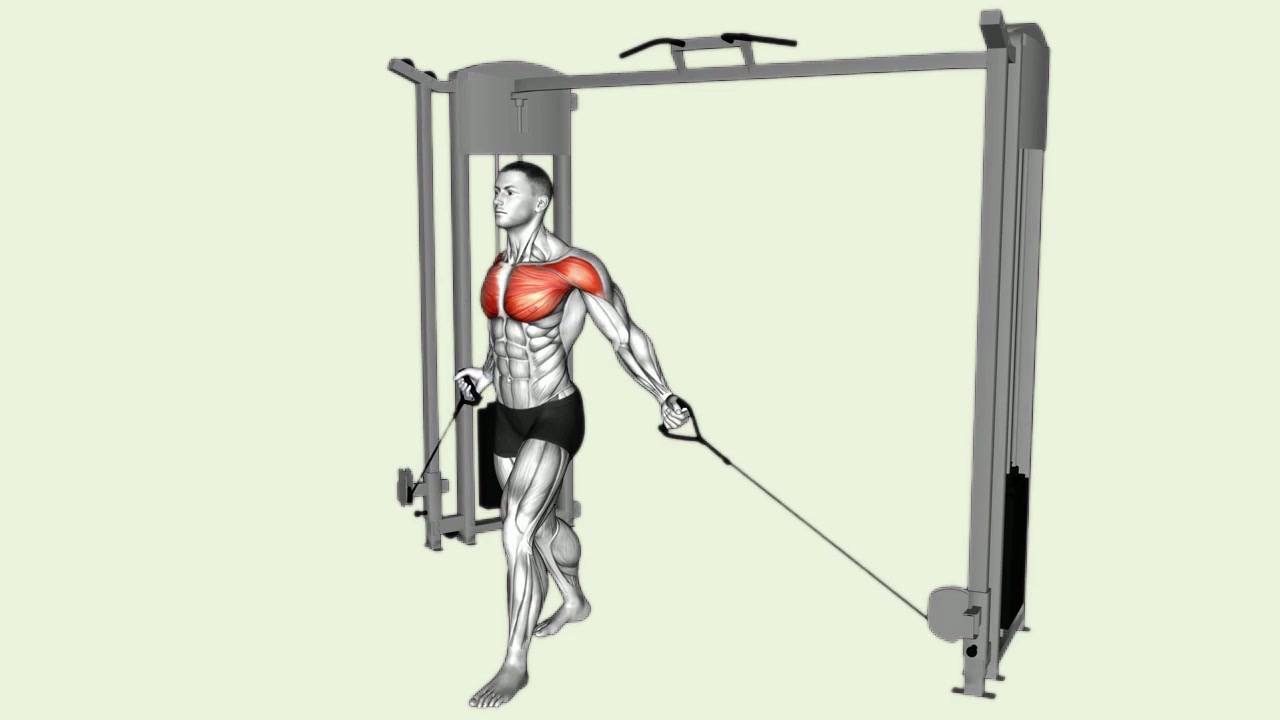
How it is executed
- Set both pulleys to the lowest position and grip a handle in each hand.
- Stand in the center with one foot slightly forward and a slight forward lean.
- With a slight bend in your elbows, bring your hands upward and together in an arc until they meet at upper chest height.
- Squeeze your chest at the top, then lower slowly along the same path.
- Focus on feeling the stretch in your upper chest at the bottom of each rep.
Common mistakes
- Bending the elbows to lift the weight. When the elbows flex, the hands rise on biceps and shoulder strength, not the chest. Keep a slight, fixed bend and use a load that allows it.
- Shrugging the shoulders as the hands meet at the top. At the close it is easy for the traps to rise and the shoulder to roll forward, and there the upper chest loses the contraction. Keep the shoulders down and bring the hands in front of you, not toward the neck.
- Leaning the torso back on the last reps. Leaning back turns the arc into a shoulder press and unloads the chest. Hold the slight forward lean for the whole set and lower the load if you cannot.
- Cutting the descent before the stretch. The bottom position, with the hands out to the sides and back, is where the upper chest stretches most and where the rep is worth the most. Lower along the same path until you feel the stretch.
Frequently asked questions
- Which part of the chest does the low-to-high cable fly work?
- It works mainly the upper, clavicular portion of the pectoralis major, because the fibers that run from the collarbone to the arm are the ones that bring the hand up and in. The anterior deltoid assists in that same arc and the biceps holds the slight elbow bend. The mid chest takes part, but the emphasis follows the direction of the cable: low to high means upper chest.
- How does the low cable fly differ from the cable crossover and the machine fly?
- The direction of the cable decides which part of the chest leads. With low pulleys the hands rise and the emphasis goes to the upper chest. In the cable crossover, with high pulleys, the hands come down and the work lands on the lower and mid chest. The machine fly closes at mid-chest height on a fixed path and is the easiest to load. All three are isolation exercises and are combined according to which area needs more volume.
- How should you stand for the low-to-high cable fly?
- Stand in the center of the station, one step in front of the pulleys, with one foot forward for a base and the torso leaning slightly forward. Keep the chest up and the shoulders back and down before you start. Raise the hands in an arc until they meet at upper-chest height, with the elbows nearly straight, and lower along the same path until you feel the stretch in the upper chest.
- How much weight should you use on the low cable fly?
- Less than it seems: the lever is long and the shoulder works almost straight. A common range is 12 to 15 reps with a load that lets you bring the hands together at the top without shrugging or bending the elbows. If your torso leans back to finish the rep, the load is too high. Many coaches place it at the end of a chest day, after the incline presses.