Half of Argentina's gyms lost members in 2026, and the first month explains why
Half of Argentina's gyms lost more than 5% of their members over the last year. The figure comes from the Argentina gyms 2026 report that Clarín published on November 25. A booking system put it together from 8 million bookings and 2.25 million classes across the country's 23 provinces, between November 2025 and October 2026.
The report holds something more useful than the headline. Gyms that grow and gyms that shrink sign up almost the same number of new members. What separates them is member retention, and above all what happens in each member's first weeks.
The typical gym has fewer people in the same classes
Comparing the same gyms against the year before, 50% lost more than 5% of their members, 35% grew more than 5% and 14% held steady.
In the typical gym, the number of people training fell from 121 to 113. The timetable barely changed: it is still 53 classes a week. Occupancy fell from 40% to 37%, and the average number of people booked per class went from 4.1 to 3.9.
Opening the room costs the same. What dropped is the number of people filling it.
How Argentina's gyms did on members
Share of gyms by how their member count changed against the year before, comparing the same gyms.
Source: Clarín, November 25, 2026
Growing and shrinking gyms get the same new members
This is the figure that matters most in the report. New members made up 11% of the total in the gyms that grew and 9% in the ones that shrank. Almost the same.
The difference shows up later:
- In gyms that grew at least 15%, 61% of new members were still training in their third month.
- In those that lost 20% or more, that number fell to 47%.
- In gyms with fuller classes, 86% of members were still there the following month. In the least busy ones, 79%.
A gym that is losing members tends to think it needs more sign-ups. The data says something else: the gym that grows keeps more of the same people who walk in.
New members still training in their third month
Both kinds of gym sign up almost the same share of new members. What changes is how many stay.
Source: Clarín, November 25, 2026
The first month decides who stays
Members who went to 9 or more classes in their first weeks were still training in their third month in 72% of cases. Those who went up to 4 times, in 48%.
That is a 24-point gap between a member who found their rhythm and one who didn't. And across the whole sample, only 22 of every 100 people who sign up for the first time are still training a year later.
The practical reading is simple. A member who rarely comes in their first month is telling you they are about to leave, and they tell you weeks in advance. A gym that notices in time can still do something about it.
Still training in the third month, by first-weeks attendance
New members grouped by how many classes they attended in their first weeks.
Source: Clarín, November 25, 2026
43% of gyms didn't update their fee
Between June and October 2026, inflation added up to 7.8%. In that period, 43% of gyms kept the price of their best-selling membership the same, 7% raised it by less than inflation and the other half adjusted it at least in line with inflation.
According to the report, the typical fee in Argentina to train three times a week is ARS 52,000 a month, and ARS 49,000 for twice a week. An ARS 52,000 membership left untouched since June should cost about ARS 56,100 to hold its value. That is ARS 4,100 less per member every month.
Applied to the report's typical gym, with 113 members, that is about ARS 463,000 a month that never comes in. The calculation is ours, with the article's numbers.
The fear behind not raising prices is losing more members. But if retention depends on the first month, price matters less than it seems: the member who trains often and sees results is the one who argues least about the fee.
What gyms did with their best-selling membership
June to October 2026, while inflation added up to 7.8%.
Source: Clarín, November 25, 2026
What to do on Monday
With this data, there are three things a gym can start watching this very week:
- Each new member's attendance in their first 4 weeks: the number to watch is how many classes they did. Anyone below 2 a week needs a message from the coach, a recommended class or an invitation to train with someone.
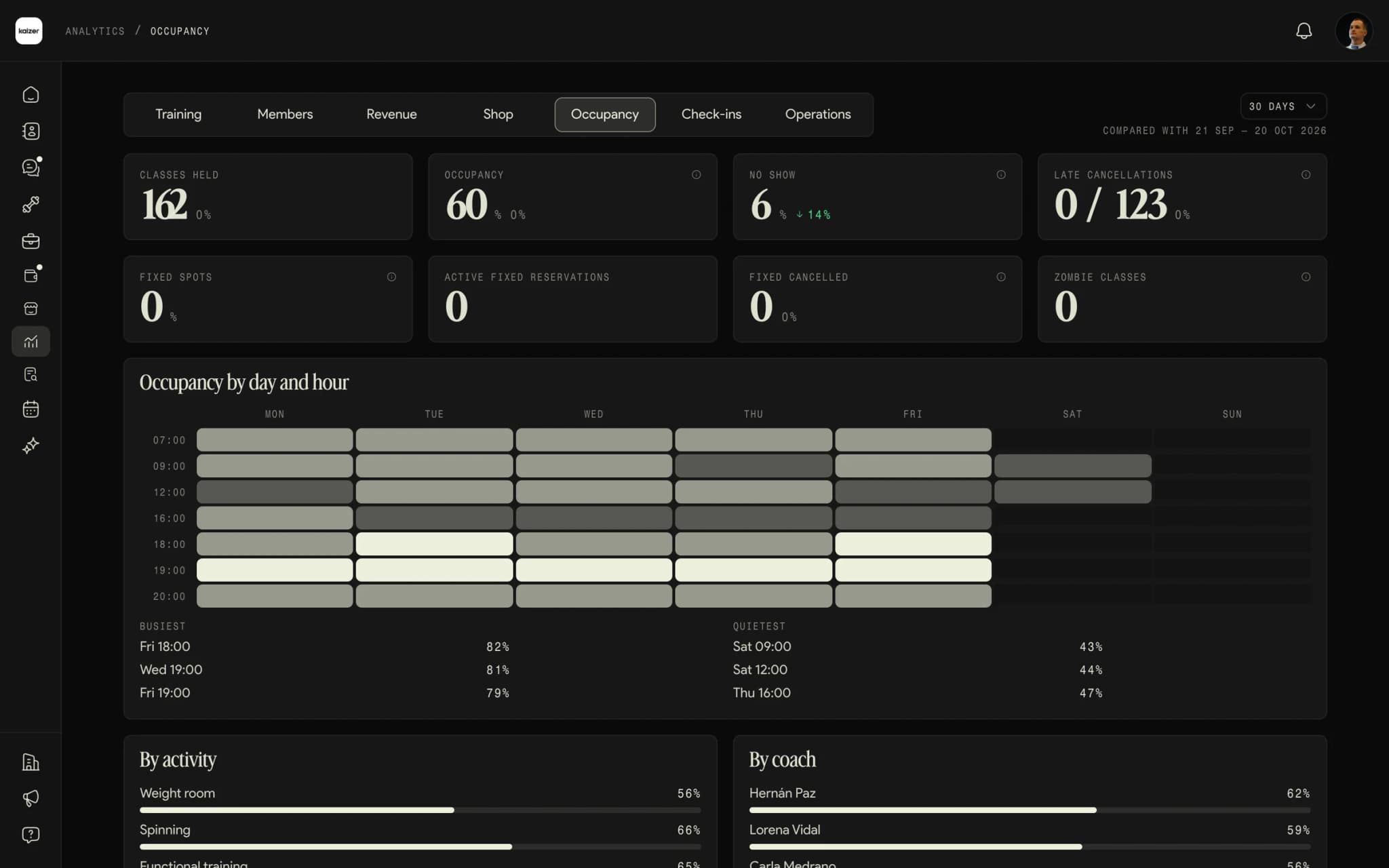
- Occupancy per class: a class with 2 people discourages both of them. Merging weak time slots can raise occupancy and retention at the same time.
- The fee against inflation: a small, regular increase hurts less than a big one after 6 months frozen.
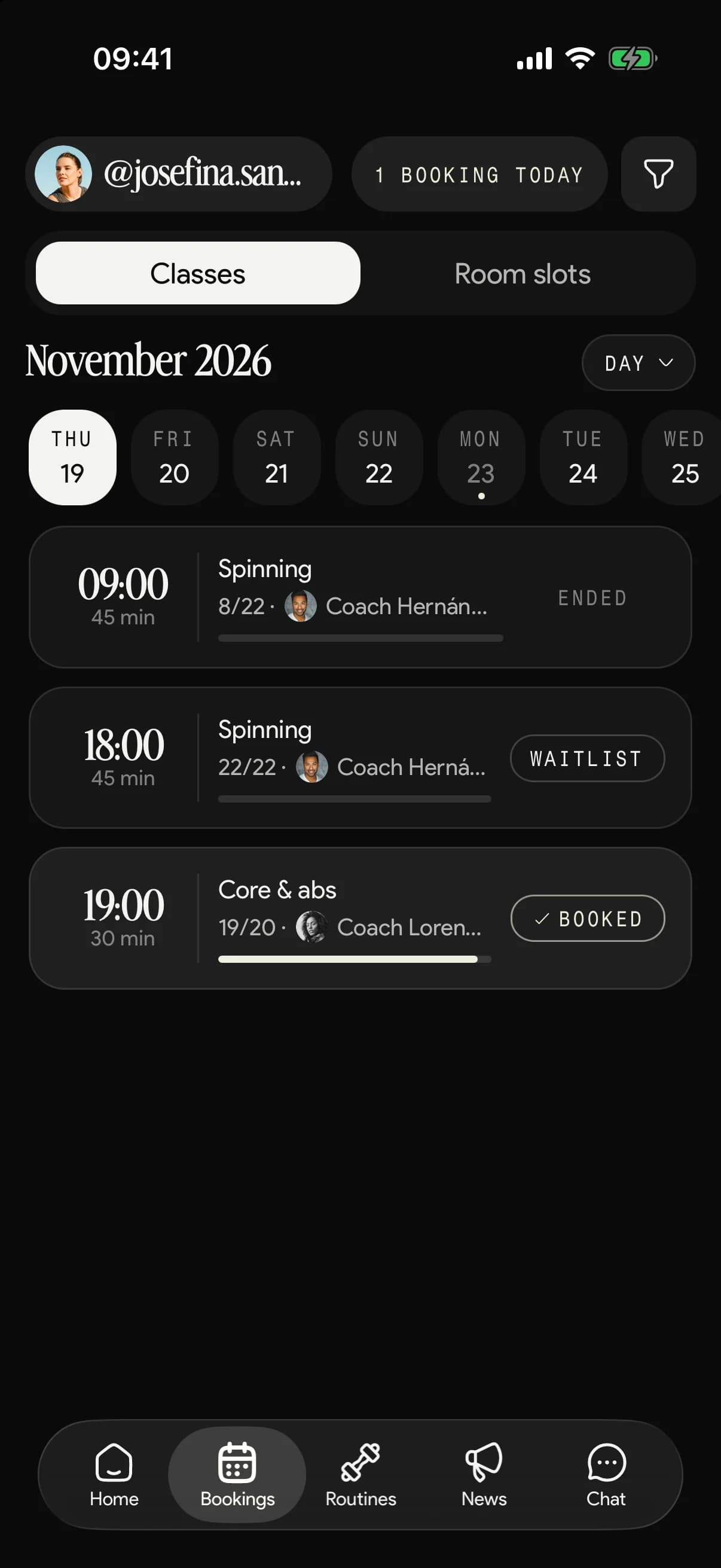
All of this takes attendance data per member, and in many gyms that data lives in a notebook or a WhatsApp group. Kaizer for Gyms & Studios brings bookings with class capacity, QR check-in and fee tracking into one panel. That way the owner sees on one screen who came, how many times and who is up to date.
A member who rarely comes in their first month is telling you they are about to leave, and they tell you weeks in advance.
What the numbers say
Half of Argentina's gyms lost members in 2026, yet almost the same number of people sign up at the gyms that grow and at the ones that shrink. Member retention at gyms is decided in the first month: someone who trains 9 times or more has a much better chance of staying. Measuring that, and acting before the member stops coming, is what separates one group from the other.
References
All figures come from Clarín's article. The only calculation of our own is the roughly ARS 463,000 a month (113 members times ARS 4,100), and the text says so.
If you want to see each new member's attendance from their first week, Kaizer for Gyms & Studios brings bookings, QR check-in and fees into one panel.
See Kaizer for Gyms & Studios